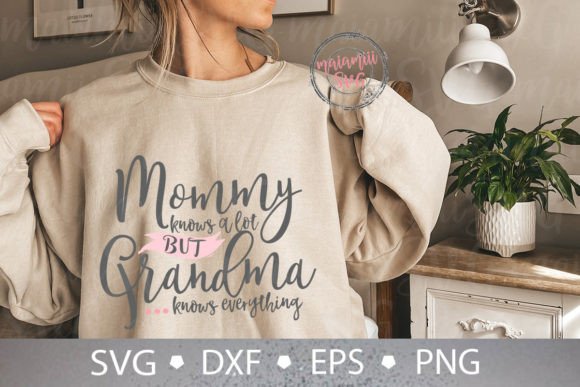
A Designer's Take on Mommy Knows a Lot but Grandma Knows Ever Graphics
Opening a new design asset for a client project always carries a bit of that professional trepidation. You’re looking for something that not only fits the brief but elevates it, adding a layer of polish and appropriate mood. When I first examined Mommy Knows a Lot but Grandma Knows Ever, my immediate impression was one of warm, familial charm. The typography and layout evoke a sense of nostalgic comfort and gentle humor, leaning into a style that feels handmade yet deliberately crafted. This isn’t a harsh, modern statement; it’s an invitation to a shared sentiment. For a designer tasked with branding a small boutique, a family-oriented product line, or a local event centered on community, this asset provides a ready-made emotional hook.
The Fit: Where This T-Shirt Design Graphic Shines in Client Projects
Let’s frame this around a real scenario: I’m developing a visual identity for a new line of handmade, organic baby products sold through an Etsy shop. The client wants the branding to feel tender, trustworthy, and a little playful. Mommy Knows a Lot but Grandma Knows Ever becomes more than just a potential t-shirt graphic; it’s a cornerstone for a cohesive visual mood. Its aesthetic naturally extends to product labels and packaging details, providing a decorative accent that reinforces the brand’s story. Imagine it subtly incorporated on a sticker seal for a soap box, or as a hero graphic on a welcome card included with orders. It sets a tone that resonates with the target audience—parents and grandparents looking for authenticity.
In practical application, this graphic performs well in larger layout areas. As a focal point on a tote bag or a mug, its details remain clear and engaging. For social media graphics, particularly Instagram posts or Pinterest pins aiming for high emotional engagement, it serves as a strong, ready-made visual center. It can anchor a campaign for a seasonal giveaway or a community event flyer, instantly communicating warmth. For print-on-demand sellers, it’s a straightforward candidate for apparel, but its utility goes further. It can be adapted into printable wall art, or used as a decorative element within a Canva template for blog visuals, adding a personalized touch to digital content.
Navigating Practical Limitations and Designer Checks
However, like any specialized design asset, its use requires thoughtful placement. In small sizes, such as on a business card or as a tiny logo element, the intricate charm may dissolve into illegibility. It should be avoided in crowded layouts where it would compete for attention, or on complex backgrounds that break its visual cohesion. This style would likely clash with projects demanding minimalist branding or professional corporate materials; it’s inherently decorative. For client work, maintaining clear visual hierarchy is key. This graphic works best as a supporting brand element or a featured accent, not as the sole informational carrier in a busy poster.
Before committing to use it for a commercial design project, a few on-the-ground tests are essential. First, check its performance in black and white to ensure it retains its character if color printing isn’t available. Preview it at both small and large scales on actual product mockups—a t-shirt, a mug, a web banner. Test its contrast on both light and dark backgrounds to guarantee readability. If the file includes an SVG format, inspect its vector editability: can you easily recolor elements to match your client’s brand palette? Always confirm the commercial license terms; for client work, unambiguous permission is non-negotiable. Finally, a test print, even on home equipment, will reveal any potential quality issues with line thickness or detail rendering.
Building Trust and Appeal with a Targeted Visual
Using Mommy Knows a Lot but Grandma Knows Ever effectively can significantly impact a project’s final impression. Its emotional appeal fosters immediate audience engagement, making a brand or product feel approachable and genuine. This builds a sense of visual trust, crucial for small business branding and handmade ventures. When used consistently across touchpoints—from the website graphics to the packaging design—it strengthens brand recognition. However, professionalism comes from mindful integration. It shouldn’t be slapped on every item; it should be curated, placed where its mood enhances the overall narrative. Compared to a clean sans-serif font, this asset adds personality. Compared to a formal script, it adds warmth. It occupies a specific niche within display font styles.
Beyond the T-Shirt: A Versatile Digital Asset
The description notes it’s a digital cut file for machines like Cricut, which points to its core utility for crafters and Cricut projects. For a designer, this translates to versatility. It can be cleanly converted into sticker designs, precise sublimation design elements, or detailed vinyl applications for merchandise. This technical precision means the asset is already optimized for production, saving time in client projects that involve physical goods. As part of a larger design bundle for a themed collection—think a "family wisdom" series—it could anchor multiple products, from apparel to printable art, creating a cohesive creative marketplace offering.
In the end, Mommy Knows a Lot but Grandma Knows Ever is a specialized tool in the graphic design asset toolkit. It won’t fit every client brief, but when the project calls for warmth, nostalgia, and a touch of handmade charm, it provides a polished, ready-to-use solution. Its value lies in its ability to quickly establish a strong visual mood, reducing the design time needed to create that emotional connection from scratch. For designers serving clients in niches like family products, local events, or boutique retail, understanding how to leverage such assets—with all the necessary professional checks—is key to delivering efficient, effective, and visually resonant creative design.