A Designer's Take on This Camping Quote Embroidery
Every embroidery designer has a drawer full of digital files, some destined for greatness, others to languish unused. When I first saw the I Don’t Always Drink When I’m Camping Oh Wait, Yes I Do design, I filed it away as a fun novelty. It was only when a client asked for a custom gift for her husband, a notorious camping enthusiast with a well-stocked cooler, that I pulled it out and truly considered its practical application.
First Impressions: Witty, Bold, and a Bit Niche
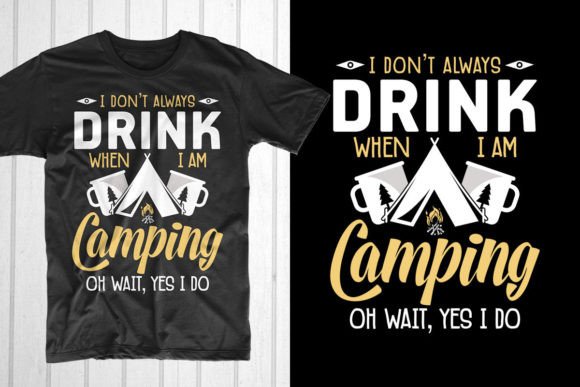
The design, categorized as a T-Shirt Graphic, immediately presents itself as a confident statement piece. Its visual personality is unapologetically humorous and social. This isn't subtle decor; it's a conversation starter. For crafters targeting a specific audience—campers, outdoor lovers, and those with a playful sense of humor—it clicks perfectly. The layout, centered around the text, suggests a straightforward embroidery project, but that simplicity is its strength. It doesn't scream "complex artistry," but rather "well-executed, relatable fun."
The Real-World Embroidery Scenario
My client’s request was for an embroidered tote bag, something her husband could use for hauling gear. This is where practical judgment begins. A tote offers a flat, stable canvas, ideal for testing a design's stitching clarity. The slogan’s length means it will occupy a significant horizontal space. On a standard tote panel, it demands a hoop size that can accommodate the text without cramping the letters, especially the smaller "Oh Wait, Yes I Do" portion. Using a proper stabilizer for the bag’s often coarser fabric was non-negotiable to prevent puckering.
This design naturally extends beyond totes. I envision it on the left chest of a heavyweight sweatshirt, the back of a cap for a more concentrated statement, or as a bold embroidered patch to be applied anywhere. For baby clothes or nursery decor, it’s obviously a mismatch—the tone is adult. However, for aprons at a campground-themed kitchen, pillow covers in a rustic cabin, or even tea towels as a cheeky gift, it finds a logical home.
Where This Design Demands Extra Care
The success of any machine embroidery design hinges on anticipating its weak points. For this one, the primary concern is text density and scale. The phrase is long. If you're considering a small hoop size for, say, a child’s t-shirt or a delicate personalized gift on thin fabric, the stitch density in the smaller letters could become problematic. They might blur into a solid blob rather than maintain crisp definition.
Dark fabric requires a strategic thread color choice—a bright white or a contrasting pastel to ensure the humor reads clearly. On stretchy fabric like a standard t-shirt, robust stabilization is key to keep the text from distorting. Embroidering on curved surfaces like caps requires careful digitization; if the embroidery file isn't adapted for that curvature, the text could appear warped. Always test the design on scrap fabric first, mimicking your final project's material and color.
Visual Appeal and Customer Perception
From a small business owner’s perspective, this design adds value through recognition and engagement. Stitched cleanly onto a high-quality custom apparel item, it elevates a simple graphic into a handmade product with character. For an Etsy seller or craft fair vendor, it taps into a specific community, building customer trust through shared humor. It’s giftable, especially for holidays like Father’s Day or birthdays. However, its niche nature means it won’t fit every brand consistency—it’s for shops with a playful, casual vibe.
Practical Notes for the Working Designer
Before committing this to a finished product, here’s my checklist. First, run a black and white mockup to see how it reads purely on shape and density, stripping away color's influence. Compare it on light and dark background visuals in your printable mockup software. This helps you and your potential buyer envision the final item.
Second, inspect the small details. How are the commas and the transition between "I Don’t Always" and "Oh Wait" handled? Are they distinct stitches or likely to merge? Third, consider the fabric texture. A fluffy sweatshirt might soften the text’s edges, while a smooth polo will keep it sharp. Finally, and crucially, confirm the licensing for this digital embroidery file. Before selling finished items or using it in commercial embroidery projects, you must know if your use is permitted. The product description mentions it's perfect for adventurous uses, but the legal boundaries are separate.
In my client’s tote bag project, the final stitches came out clean and bold. The reaction was exactly what I predicted: immediate laughter and a "that’s so him" comment. That’s the proof of a design’s practical success. The I Don’t Always Drink When I’m Camping Oh Wait, Yes I Do embroidery design isn’t a universal tool, but for the right project and the right audience, it’s a powerfully effective one. As a designer reviewing it for real work, I judge it a solid, situational asset for your craft business inventory.